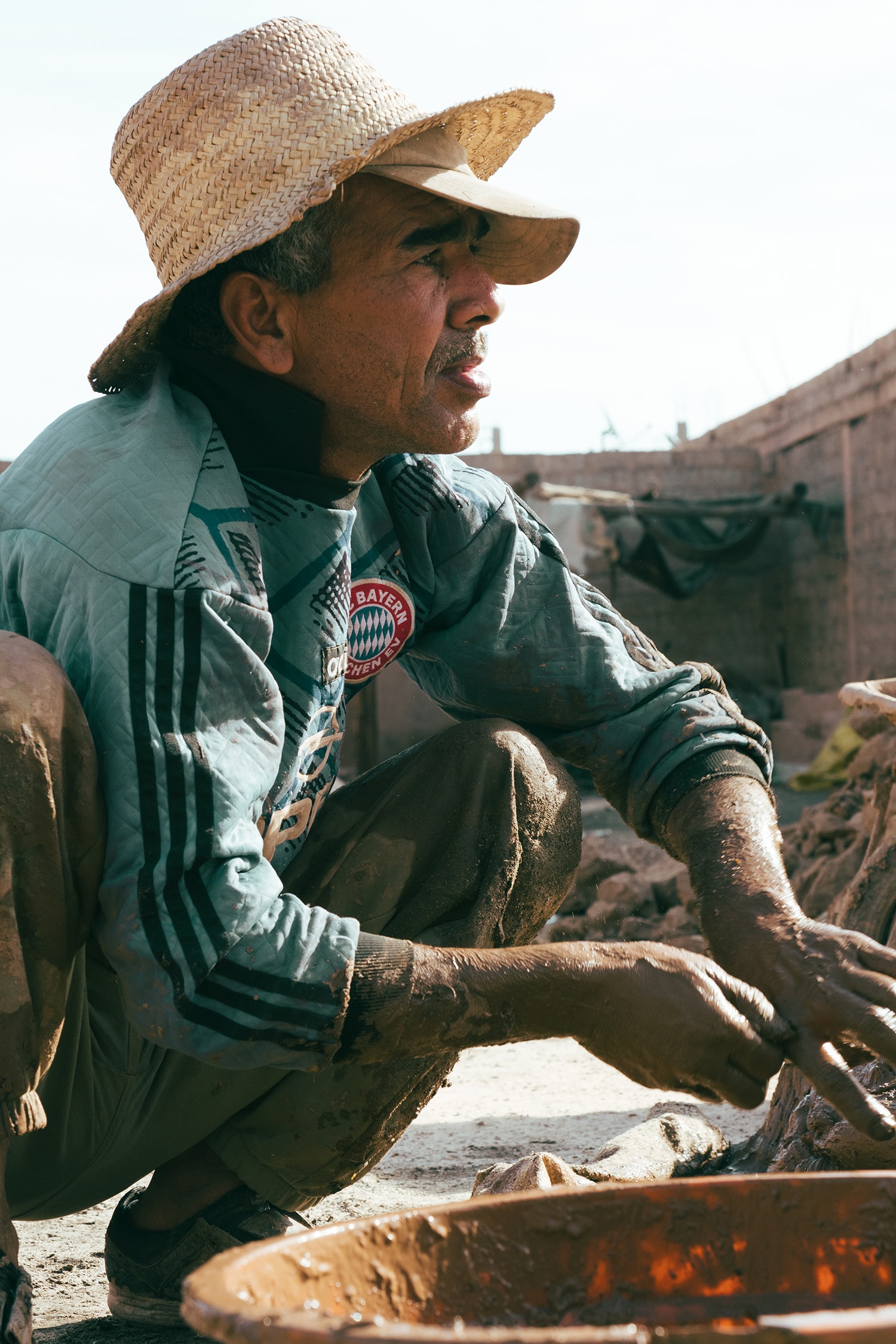
Crouched low with hands caked in wet mud, a worker pauses mid-task, his sun-worn face turned toward something in the distance, sweat and dust evident in every detail of his expression. Behind him, the unmistakable silhouette of adobe walls rises against a pale sky — a scene straight out of Morocco's centuries-old tradition of earthen construction, where mud, straw, and manual labor continue to shape homes much as they always have. His straw hat and worn tracksuit jacket, splattered with the same mud coating his arms, tell the story of a physically demanding trade passed down through generations. This kind of hand-built architecture — using rammed earth or mudbrick — remains common throughout rural Morocco, particularly in regions where clay-rich soil makes it both practical and deeply traditional, keeping homes cool in summer and warm in winter. There's an unguarded honesty to this photograph — no posed smile, just a brief pause in the middle of hard, physical work. It's a portrait less about the man himself and more about the labor, tradition, and resilience embedded in Morocco's rural building culture.