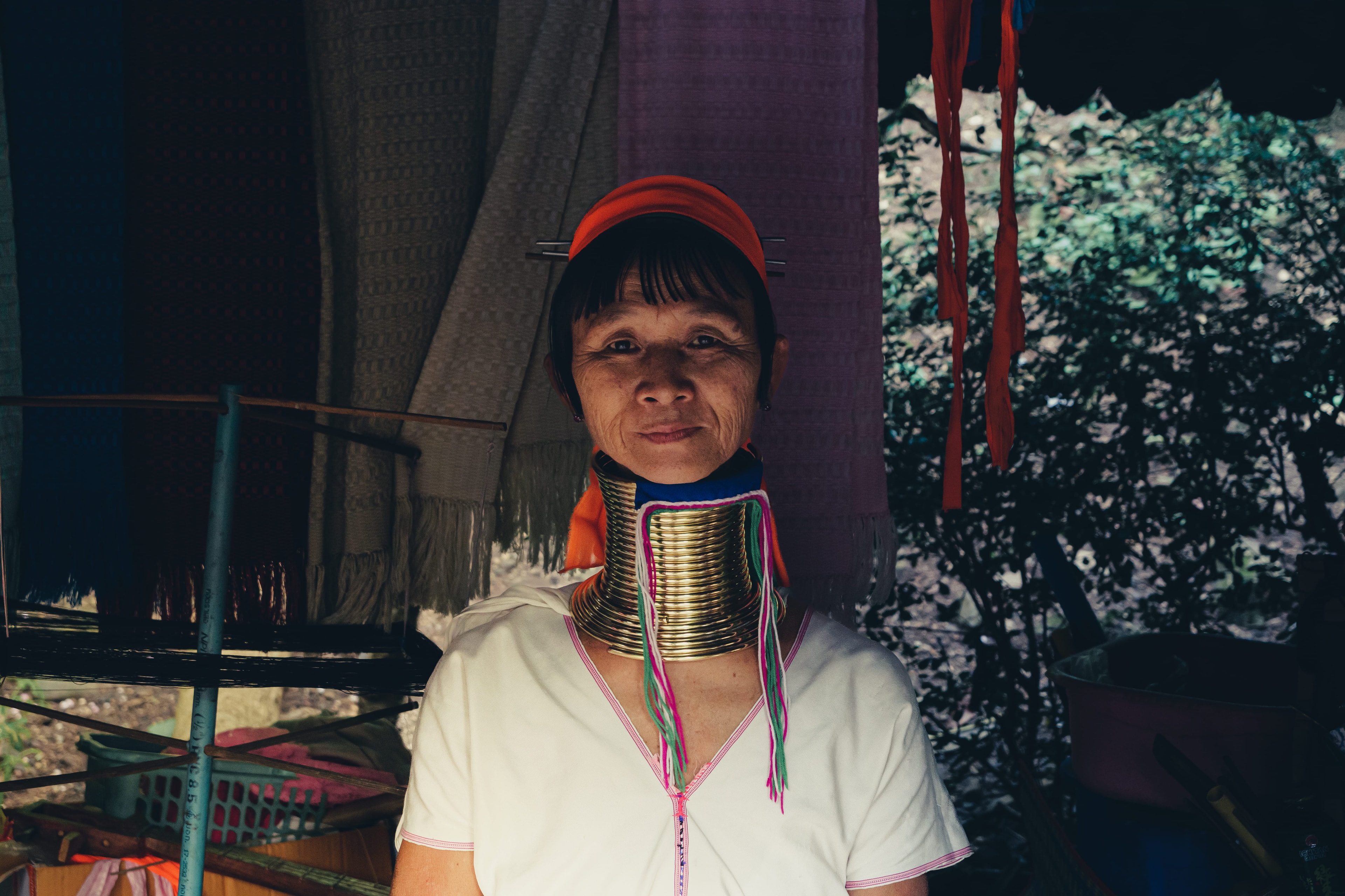
A Kayan woman gazes calmly into the camera, her neck wrapped in the distinctive stacked brass coils that have made her community, often referred to as the "long neck" people, one of the most recognized ethnic groups in northern Thailand. Colorful threads — pink, green, and white — hang from the base of the coils, adding a soft touch of color against the metal's warm golden sheen, while a bright orange headscarf frames her face and is held in place with simple hairpins. Behind her, hand-woven textiles in muted greys and deep purples hang like a backdrop, hinting at the traditional weaving many Kayan women practice and sell to support their households. A loom and woven baskets are visible in the shadows to the left, while strips of red cloth flutter outside in dappled sunlight, suggesting a hillside village setting typical of the Mae Hong Son or Chiang Rai regions. The image captures both the individual — her quiet, direct expression carrying decades of history — and the broader story of the Kayan people, refugees originally from Myanmar's Kayah State who settled in Thailand and have maintained this centuries-old custom of neck rings, a practice tied to identity, beauty, and cultural continuity even as it has also become entangled with the region's tourism economy.