Japon
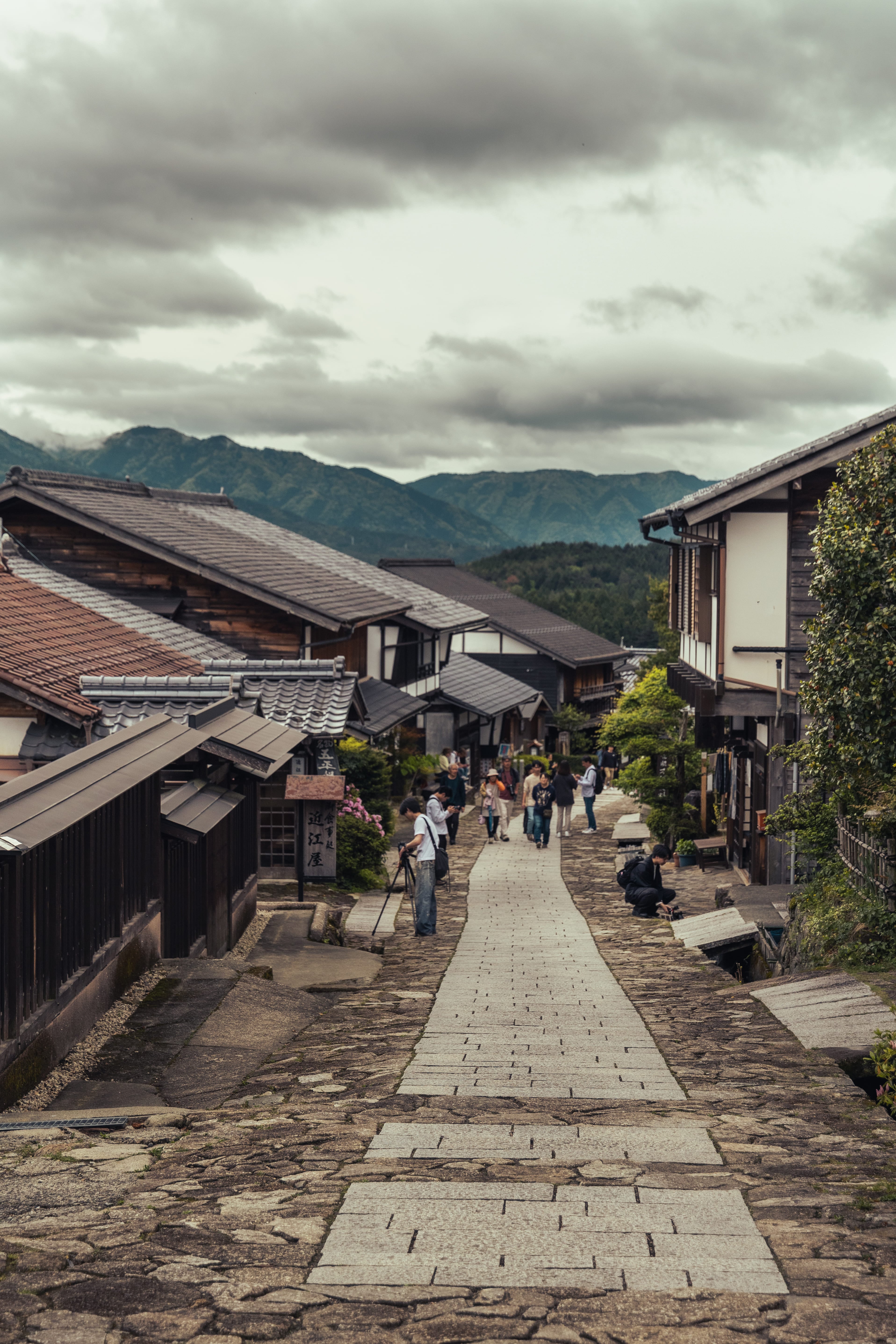
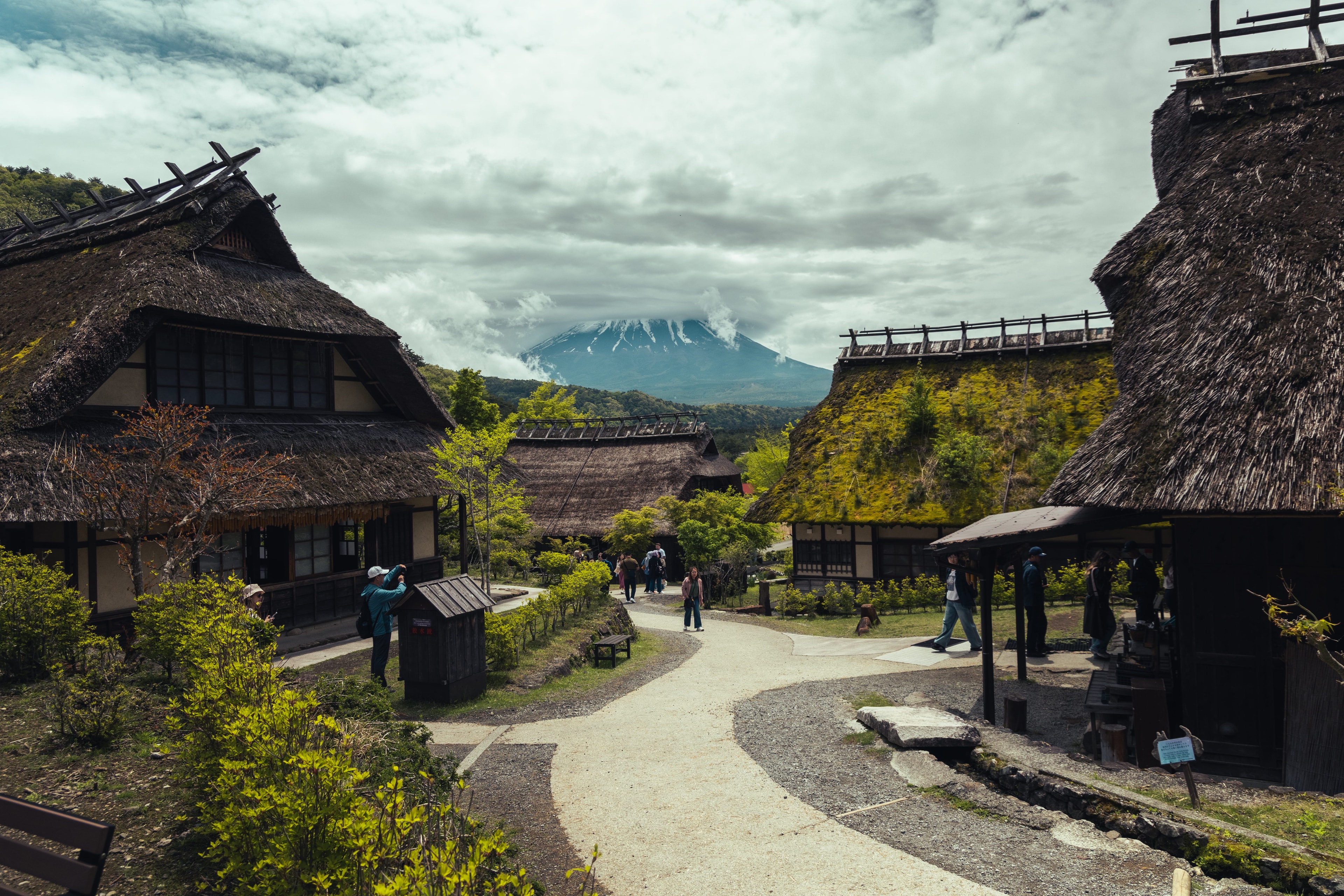
Traditional thatched-roof houses line a quiet stone path in this preserved village along Japan's historic Nakasendo route, their steep, moss-covered roofs standing as living reminders of centuries-old rural architecture. Once one of the main routes connecting Kyoto and Edo (modern-day Tokyo), the Nakasendo was traveled by feudal lords, merchants, and pilgrims alike, and villages like this one preserve that history in remarkably intact form. In the distance, Mount Fuji rises through a dramatic veil of clouds, its snow-streaked peak partially obscured yet unmistakably present, anchoring the entire scene with quiet grandeur. Visitors wander the gravel paths between houses, pausing to take photos or simply admire the architecture, while lush greenery and neatly trimmed shrubs soften the earthy tones of wood and thatch throughout the village. Traditional thatched-roof houses line a quiet stone path through Saiko Iyashi-no-Sato Nenba, a preserved village at the foot of Mount Fuji rebuilt after a 1966 typhoon destroyed the original settlement. Steep, moss-covered roofs stand as living reminders of the region's rural architecture, restored and maintained to showcase traditional Japanese village life exactly as it once was along the Fuji Five Lakes area. In the distance, Mount Fuji rises through a dramatic veil of clouds, its snow-streaked peak partially obscured yet unmistakably present, anchoring the entire scene with quiet grandeur. Visitors wander the gravel paths between houses, pausing to photograph the historic buildings — many of which now function as craft workshops, galleries, and small museums — while lush greenery and neatly trimmed shrubs soften the earthy tones of wood and thatch throughout the village. This photograph captures a rare blend of natural and cultural landmarks in a single frame — one of Japan's most iconic mountains framed by one of its most carefully preserved traditional villages. A quiet, living museum where the past continues to be honored in the shadow of Fuji.